
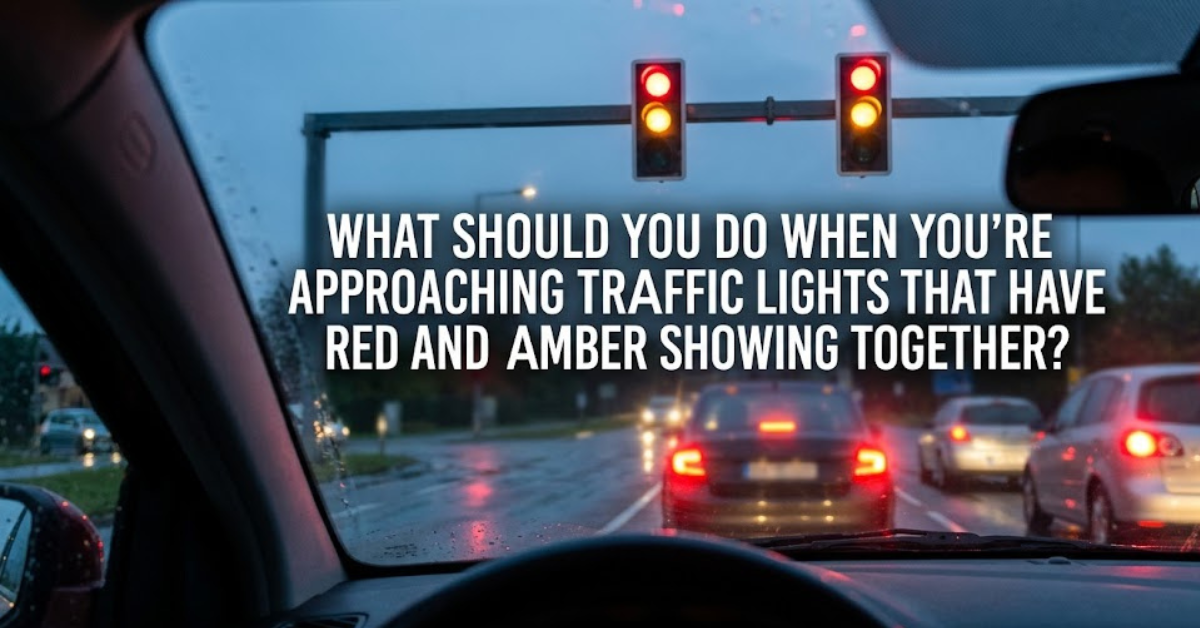
Imagine you’re waiting at a traffic light, watching the signals change. The red light has been holding traffic in place, and suddenly you notice both the red and amber lights illuminated together. Many drivers, especially new ones, wonder: what should you do when you’re approaching traffic lights that have red and amber showing together?
Understanding traffic signal sequences is an essential part of safe driving. While red, amber, and green lights are familiar to most motorists, the combination of red and amber displayed simultaneously can sometimes cause confusion.
In this guide, we’ll explain exactly what red and amber lights together mean, what action drivers should take, why the signal exists, and how to stay safe when approaching an intersection.
What Does Red and Amber Showing Together Mean?
In countries that use this traffic signal sequence, such as the United Kingdom and several other regions, red and amber displayed together indicates that the traffic lights are about to change to green.
Simple Meaning
Red + Amber = Prepare to Go
However, this does not mean you should move immediately.
The purpose of the signal is to alert drivers that the green light is about to appear.
What Should You Do When You’re Approaching Traffic Lights That Have Red and Amber Showing Together?
The correct action is:
Stop and Prepare to Move
If you are already stopped at the traffic lights:
- Remain stationary.
- Prepare to move when the green light appears.
- Check that the intersection is clear.
- Proceed only when the green signal is displayed.
Important Rule
Do not cross the stop line while the red and amber lights are showing together.
You must wait for the green light.
Why Do Traffic Lights Use Red and Amber Together?
Traffic engineers use the red-and-amber combination to improve safety and traffic flow.
Benefits of the Signal
The signal helps drivers:
- Prepare mentally to move.
- Select the appropriate gear.
- Focus attention on the road ahead.
- Reduce delays when the light turns green.
Without this warning phase, drivers might react more slowly when the signal changes.
Red and Amber Is Not the Same as Green
One common mistake is assuming that red and amber together means it’s safe to go.
What the Signal Means
- Red = Stop
- Red + Amber = Prepare
- Green = Go if safe
- Amber = Stop if it is safe to do so
- Red = Stop
Notice that red and amber is a transition phase, not a permission to proceed.
What If You’re Still Approaching the Lights?
The answer depends on your position relative to the intersection.
If You Have Not Reached the Stop Line
Continue preparing to stop unless the light turns green before you reach it.
Drivers should:
- Maintain awareness.
- Control speed appropriately.
- Be prepared for signal changes.
If You’re Already Waiting
Simply remain stopped and get ready to move when green appears.
Common Driver Mistakes at Red and Amber Lights
Understanding common mistakes can help improve safety.
Mistake #1: Moving Too Early
Some drivers begin rolling forward before the green light appears.
This is incorrect and may violate traffic laws.
Mistake #2: Assuming Cross Traffic Has Stopped
Even after the light changes, intersections can remain hazardous.
Always check for:
- Late vehicles
- Cyclists
- Pedestrians
- Emergency vehicles
Mistake #3: Distraction
Drivers often look at phones, adjust controls, or lose focus while waiting.
The red-and-amber phase is designed to refocus attention on driving.
Traffic Light Sequence Explained
Understanding the complete sequence helps remove confusion.
Standard Sequence
- Green
- Amber
- Red
- Red and Amber Together
- Green
The red-and-amber phase serves as a brief warning that the green signal is about to appear.
Why You Should Never Rush an Intersection
Even when the light is about to turn green, rushing can be dangerous.
Potential Risks
- Cross traffic still clearing the intersection
- Pedestrians finishing a crossing
- Cyclists entering the roadway
- Vehicles running a red light
A moment of patience can prevent serious accidents.
Safe Driving Tips at Signalized Intersections
Whether you’re a new driver or have years of experience, these habits improve safety.
Best Practices
- Stay alert while waiting.
- Watch traffic signal changes carefully.
- Check mirrors before moving.
- Look both ways before entering the intersection.
- Yield to emergency vehicles when necessary.
- Proceed smoothly after the green signal appears.
These simple actions can significantly reduce collision risks.
Differences Between Countries
Traffic light systems vary around the world.
Countries Using Red and Amber Together
Examples include:
- United Kingdom
- Ireland
- Several Commonwealth nations
Countries Without This Signal
Some countries transition directly from red to green.
Drivers traveling internationally should familiarize themselves with local traffic laws.
How Learner Drivers Can Remember the Rule
A simple memory aid can help.
Think:
Red = Stop
Red + Amber = Get Ready
Green = Go
This sequence makes it easy to remember the correct action.
Frequently Asked Questions
What should you do when you’re approaching traffic lights that have red and amber showing together?
You should remain stopped and prepare to move. Do not proceed until the green light appears.
Does red and amber together mean go?
No. It means the green light is about to appear, but you must continue waiting.
Why are both red and amber lights illuminated?
The combination provides advance warning that the signal is about to change to green.
Can you cross the stop line when red and amber are showing?
No. Drivers must wait until the green signal is displayed.
What should you do if you’re already stopped at the lights?
Remain stationary, stay alert, and prepare to move when the green light appears.
Is red and amber used in every country?
No. Traffic signal sequences differ depending on local laws and traffic regulations.
Should you check the intersection before moving on green?
Yes. Always ensure the intersection is clear and safe before proceeding.
Conclusion
Knowing what should you do when you’re approaching traffic lights that have red and amber showing together is an important part of safe and responsible driving. The correct response is simple: remain stopped, prepare to move, and wait for the green signal before proceeding. The red-and-amber combination serves as a warning that the light is about to change, not as permission to enter the intersection.
By understanding traffic light sequences, avoiding common mistakes, and staying alert at intersections, drivers can improve road safety for themselves and everyone around them. The next time you see red and amber lights together, remember the rule: stop, prepare, and wait for green.