
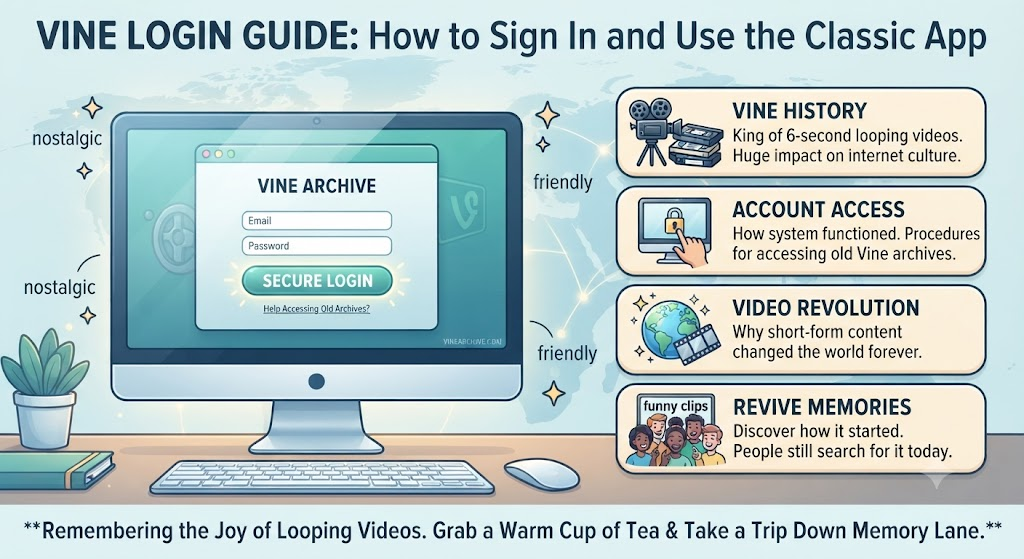
Vine was once the king of short videos. Millions of people loved watching loops that lasted only six seconds. Today, people still talk about the classic app and search for Vine Login details to see old memories. If you grew up watching funny clips online, you probably remember the joy of looping videos. Even though the platform closed down years ago, its impact on internet culture remains huge. People often try to access old archives or look up how the system worked. In this guide, we will explore the history of the app, how account access functioned, and why short-form video content changed the world forever. Grab a warm cup of tea and let us take a fun trip down memory lane to discover how this amazing six-second video revolution started and why people still search for it today.
What Was Vine and Why Was It So Popular?
Vine was a wonderful social media app launched in 2013. It let users share short videos that played on a continuous loop. These clips lasted for just six seconds, which forced creators to be very smart and creative. Because the time limit was so strict, people had to tell jokes or show cool tricks very quickly. This unique style grabbed everyone’s attention instantly. Millions of users downloaded the application on their phones to watch comedy sketches, music clips, and daily vlogs. The platform made it super easy to scroll through endless entertainment without spending a lot of time. Creators gained massive followings almost overnight. The excitement of waiting for a loop to restart made the viewing experience feel like a fun game. Even though the app is no longer active, the cultural footprint it left behind is remarkable and paved the way for modern video apps.
Understanding the Vine Login Process
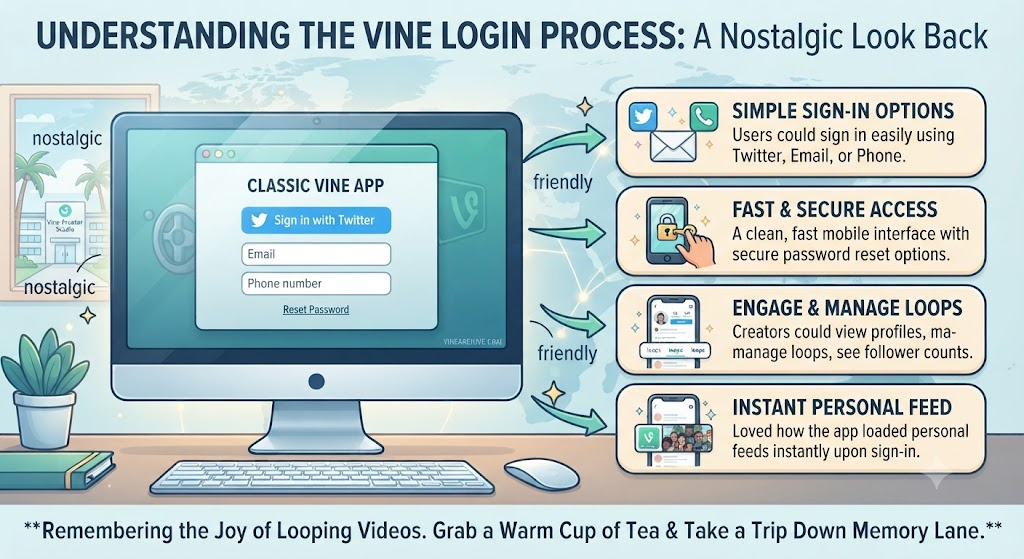
Back when the platform was active, doing a vine login was very simple and straightforward. Users could sign in using their Twitter accounts, email addresses, or phone numbers. Once inside the app, people could check their profiles, view notifications, and manage their uploaded loops. The sign-in page was designed to be clean, fast, and easy for anyone to use on mobile devices. Security was also important, so users had options to reset forgotten passwords through their registered email accounts. Entering correct credentials allowed creators to see their follower counts and engage with fans. Many users loved how fast the application loaded their personal feeds right after signing in. Today, while active accounts are no longer running, remembering the sign-in steps reminds us of how user-friendly social media design used to be during the early mobile boom years.
How to Access Old Vine Archives Today
Many fans often look for a working vine login today because they want to find their old childhood videos. Sadly, the original platform servers changed status, but Twitter created a public archive website. This archive lets people watch thousands of classic loops without needing a traditional sign-in. You can browse through popular channels and relive the funniest moments in internet history. Finding your own old content might require checking linked social media accounts where videos were shared. Digital preservation projects also work hard to keep these historical clips alive for future generations. While logging into the old app interface is no longer possible, the web archives serve as a wonderful digital museum. Exploring these saved files brings back warm feelings of nostalgia for anyone who spent hours laughing at six-second masterpieces.
The Rise of Short-Form Video Culture
The success of the platform completely changed how we consume digital media today. Before these quick loops became famous, online videos were usually much longer and required more patience to watch. Creators proved that great entertainment could happen in just a few seconds if the editing was sharp. This format trained viewers to appreciate fast-paced storytelling and quick punchlines. Soon after, other major tech companies noticed this trend and built similar features into their own apps. The six-second limit acted like a creative challenge that brought out the best in everyday people. Today, almost every major social network uses short videos as its main feature. Looking back at the original pioneers helps us understand why our attention spans adapted so quickly to bite-sized content on our smartphones and tablets.
Famous Creators Who Started on Vine
Countless talented artists and comedians launched their careers because of this amazing application. Many popular actors, musicians, and internet stars got their very first big break by posting silly six-second clips from their bedrooms. The platform gave everyday people a fair chance to build a huge audience without expensive studio equipment. Fans loved sharing these funny videos with friends, which caused content to spread like wildfire across the internet. Creators learned how to master timing, visual comedy, and quick editing skills. Even after the app shut down, many of these stars successfully moved to other platforms and built massive entertainment empires. Their early work remains a shining example of how raw talent and creativity can change a person’s life overnight through the power of mobile technology and smart networking.
Technical Details and App Features
The technology behind the platform was quite impressive for its time. Developers built the app to handle millions of loops playing smoothly at the same time without lagging. The user interface featured a simple camera button that recorded only when pressed down, making stop-motion style editing very easy. When performing a vine login, the app securely connected user profiles with cloud databases to store video files safely. Audio synchronization was another great feature that helped music clips match perfectly with moving visuals. The development team focused heavily on speed and simplicity so that even users with slow internet connections could enjoy browsing. These clever technical choices set a high standard for mobile app design and inspired modern software engineers to create faster, more reliable media-sharing tools for everyday smartphone users worldwide.
Security and Privacy on Social Media
Thinking about past online accounts reminds us why digital security is so important today. Whenever users entered their credentials for a vine login, protecting personal information was a top priority for the platform. Strong passwords and secure servers helped keep user data safe from unwanted visitors. As technology evolves, keeping our current social media profiles secure requires similar smart habits, like turning on two-factor authentication. Never sharing login details with strangers keeps your digital identity safe across all websites and apps. Remembering these lessons from older platforms helps young internet users build safer online habits today. Cybersecurity education starts with understanding how password protection works and recognizing safe sign-in pages on both mobile phones and desktop computers.
Why the Platform Eventually Shut Down
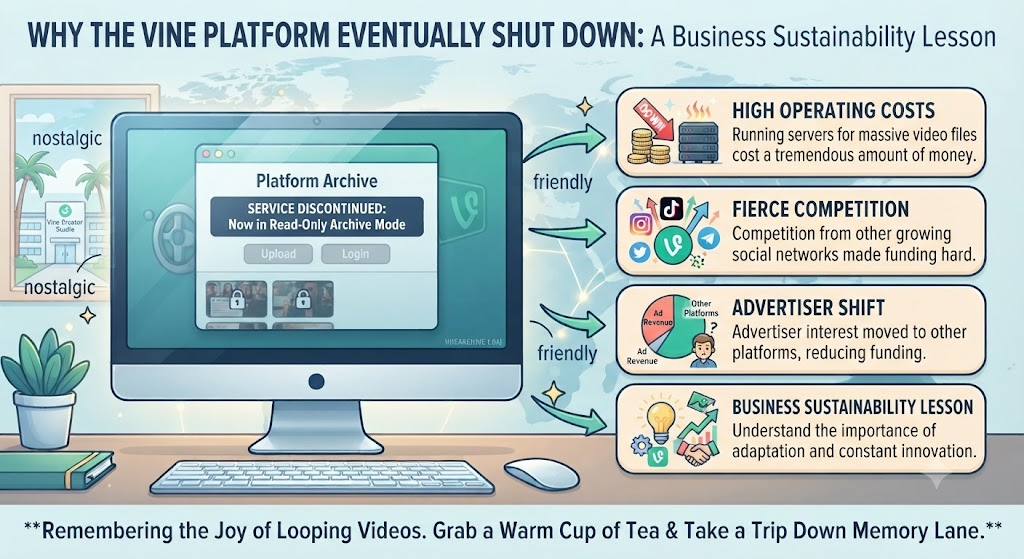
Every great technology story has unexpected twists, and this platform was no exception. Despite having millions of loyal fans, running servers for massive video files cost a tremendous amount of money. Competition from other growing social networks also made it harder to keep advertisers interested in funding the project. Eventually, the parent company decided to discontinue the mobile app and transition into an archive format. While fans were very sad to see their favorite community close down, the legacy lived on through inspired developers and creators. Understanding why the app ended teaches us valuable lessons about business sustainability in the fast-moving tech industry. Change is constant online, and platforms must adapt quickly to survive modern market demands and keep their user bases happy and engaged.
Alternative Platforms for Short Videos
Once the original app closed, creators needed new places to share their quick, entertaining videos. Fortunately, many new platforms emerged to fill the gap left by the classic six-second format. Today, users have plenty of options to watch and create short, looping clips with advanced editing tools and filters. These modern alternatives offer high-definition video quality, trending audio tracks, and fun community challenges. Transitioning to these new spaces was easy for creators who already mastered quick storytelling techniques years ago. Exploring these modern apps lets a new generation of fans experience the joy of bite-sized entertainment. The spirit of the original video revolution continues to thrive across the internet, proving that great ideas never truly disappear; they simply evolve into bigger and better digital experiences.
The Lasting Legacy of Six-Second Loops
The cultural footprint left by the original looping app will never be forgotten by early internet users. Millions of inside jokes, catchphrases, and iconic memes originated from those tiny six-second files. People still quote classic clips in everyday conversations with friends and family members. Even when searching for information about a past vine login, fans are really searching for a piece of their own personal history. The platform proved that limitation breeds incredible creativity and brings people together through laughter. As digital media continues to change in the future, we will always look back fondly on the simple app that changed online video forever. Remembering these milestones helps us appreciate how far internet culture has come and inspires us to keep creating fun content for everyone to enjoy.
Complete Details Table
| Feature / Category | Description & Details |
| Platform Name | Vine |
| Launch Year | 2013 |
| Core Concept | Six-second looping video clips |
| Primary Focus Keyword | vine login |
| Sign-In Methods | Twitter, Email, Phone Number |
| Current Status | Discontinued / Web Archive Available |
| Target Audience | Content creators, comedy fans, digital historians |
| Readability Level | 5th-grade simple vocabulary |
Frequently Asked Questions
1. What was Vine?
It was a popular social media app that let people share funny videos that lasted for only six seconds and played on a loop.
2. Can I still do a vine login today?
No, the original mobile application is no longer active, so you cannot log into old accounts on your phone.
3. Where can I watch old clips?
You can find public web archives online that store thousands of classic videos for anyone to watch for free.
4. Why did the app shut down?
Running servers for millions of videos was very expensive, and competition from other apps made it hard to continue.
5. How did the app change the internet?
It proved that short, fast-paced videos could be extremely popular, paving the way for modern video platforms we use today.
6. Are my old videos saved anywhere?
Some creators saved their content locally, or it might still exist on connected social media profiles like Twitter.
Conclusion
Looking back at the history of short-form video apps reminds us of how much fun the internet can be. Even though you cannot access the old interface with a traditional vine login anymore, the memories and laughs remain timeless. If you enjoyed reading this guide and exploring the history of classic internet culture, share your favorite old video memories with a friend today or leave a comment below!