
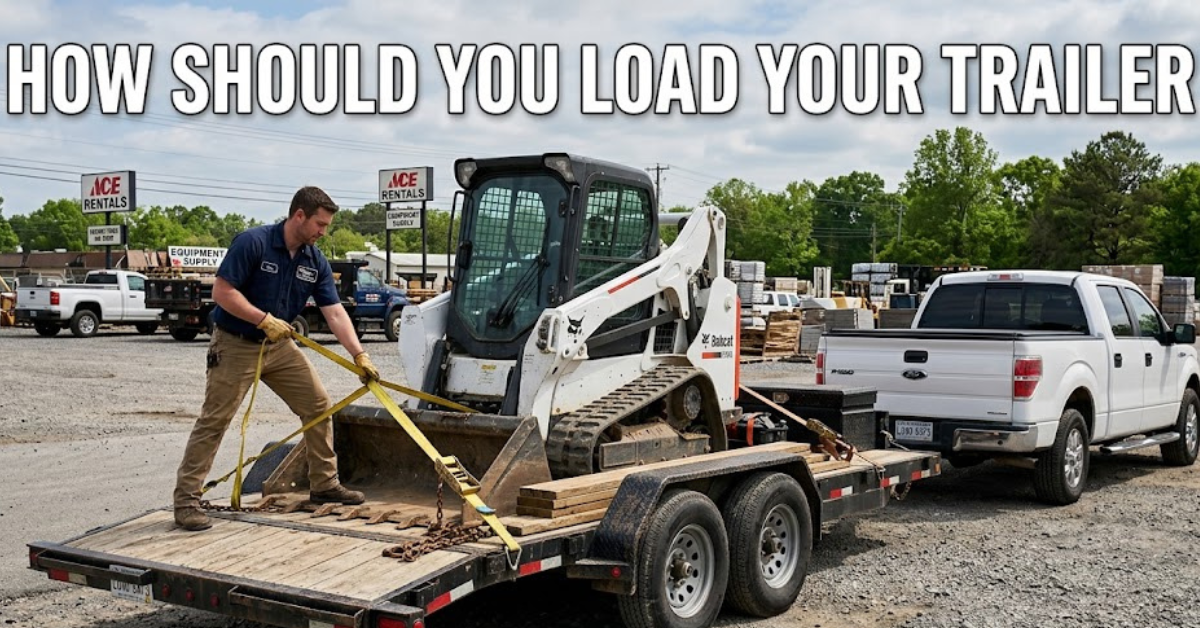
Loading a trailer may seem straightforward, but doing it incorrectly can create serious safety hazards. An improperly loaded trailer can sway, reduce vehicle control, increase stopping distances, and even lead to accidents. That’s why understanding how should you load your trailer is essential whether you’re hauling furniture, equipment, recreational vehicles, or construction materials.
Many trailer-related incidents occur not because of mechanical failures but because cargo wasn’t distributed properly. Fortunately, following a few proven loading principles can dramatically improve towing safety and confidence.
In this guide, you’ll learn how should you load your trailer, the importance of weight distribution, common mistakes to avoid, and practical tips for securing your cargo safely.
Why Proper Trailer Loading Matters
Before discussing how should you load your trailer?, it’s important to understand why loading techniques matter.
A trailer acts as an extension of your vehicle. When weight is distributed unevenly, it affects:
- Steering control
- Braking performance
- Tire wear
- Fuel efficiency
- Trailer stability
- Overall road safety
Even a small mistake in cargo placement can increase the risk of trailer sway or loss of control.
How Should You Load Your Trailer?
The general rule is simple:
Place About 60% of the Cargo Weight Toward the Front
Most towing experts recommend positioning approximately 60% of the cargo weight in the front half of the trailer and 40% in the rear half.
This creates proper tongue weight and improves stability.
Key Loading Principle
- Heavy items should be placed low and near the trailer axle.
- Weight should be distributed evenly from side to side.
- Cargo should be secured firmly to prevent shifting.
Following these principles helps ensure safe towing.
Understanding Trailer Tongue Weight
One of the most important concepts in trailer loading is tongue weight.
What Is Tongue Weight?
Tongue weight is the downward force the trailer exerts on the hitch.
Most trailers perform best when tongue weight equals approximately:
10% to 15% of the total loaded trailer weight
Why It Matters
Too little tongue weight can cause:
- Trailer sway
- Poor steering control
- Instability at highway speeds
Too much tongue weight can cause:
- Excessive strain on the tow vehicle
- Reduced front-wheel traction
- Poor handling
Proper loading helps achieve the correct balance.
Place Heavy Items Correctly
When deciding how should you load your trailer, cargo placement is critical.
Best Position for Heavy Cargo
Place heavy items:
- Slightly forward of the trailer axle
- Low to the trailer floor
- Centered from left to right
This lowers the trailer’s center of gravity and improves stability.
Examples of Heavy Cargo
- Appliances
- Construction materials
- Toolboxes
- Generators
- Furniture
Avoid placing heavy items at the rear of the trailer whenever possible.
Distribute Weight Evenly Side to Side
Uneven side-to-side loading creates handling problems.
Problems Caused by Uneven Weight
- Tire overload
- Leaning trailers
- Reduced braking performance
- Increased rollover risk
Best Practice
Try to distribute weight evenly across both sides of the trailer.
Think of the trailer as a balanced scale.
Secure All Cargo Properly
Correct weight distribution is only part of the process.
Cargo must also be secured.
Why Cargo Securement Matters
Unsecured cargo can:
- Shift during turns
- Move under braking
- Alter weight distribution
- Damage the trailer
- Cause accidents
Recommended Securement Methods
Use:
- Ratchet straps
- Chains
- Tie-down anchors
- Cargo nets
- Load bars
Always inspect tie-downs before beginning your trip.
Keep the Center of Gravity Low
A lower center of gravity improves trailer stability.
How to Achieve This
Place:
- Heavy items on the floor
- Lighter items on top
- Tall items near the center
Avoid stacking heavy objects high inside the trailer.
Benefits
A low center of gravity:
- Reduces rollover risk
- Improves cornering stability
- Enhances towing control
Avoid Overloading Your Trailer
Even a perfectly balanced load becomes dangerous if it exceeds weight limits.
Check These Ratings
Before loading:
- Trailer Gross Vehicle Weight Rating (GVWR)
- Trailer axle capacity
- Tire load ratings
- Hitch rating
- Tow vehicle towing capacity
Never exceed the manufacturer’s limits.
Common Trailer Loading Mistakes
Knowing what not to do is just as important as knowing what to do.
Mistake #1: Loading Too Much Weight in the Rear
Rear-heavy trailers often develop dangerous sway.
Mistake #2: Uneven Side Loading
Uneven loads create handling and tire issues.
Mistake #3: Failing to Secure Cargo
Even balanced cargo can become hazardous if it shifts.
Mistake #4: Ignoring Weight Limits
Overloaded trailers increase accident risk and mechanical wear.
Mistake #5: Stacking Heavy Items Too High
A high center of gravity reduces stability.
Trailer Loading Checklist
Before every trip, review the following checklist.
Pre-Trip Inspection
Cargo centered side to side
Heavy items positioned low
Approximately 60% of weight forward
Cargo securely tied down
Tires properly inflated
Hitch securely connected
Safety chains attached
Lights functioning properly
Weight limits not exceeded
This quick inspection can prevent major problems on the road.
Trailer Loading for Different Types of Cargo
Moving Household Goods
- Place furniture near the axle.
- Secure appliances separately.
- Fill empty spaces to reduce shifting.
Landscaping Equipment
- Position mowers and heavy tools near the front.
- Secure equipment using rated tie-downs.
Recreational Vehicles
- Balance gear evenly.
- Avoid concentrating weight at one end.
Construction Materials
- Distribute materials evenly.
- Keep loads low and secure.
Different cargo types require the same fundamental principles of balance and securement.
How Trailer Loading Affects Driving
Proper loading improves:
- Steering response
- Braking efficiency
- Fuel economy
- Tire life
- Driver confidence
Improper loading often causes:
- Sway
- Excessive bouncing
- Difficult handling
- Increased stopping distance
A well-loaded trailer simply feels more stable and predictable.
Frequently Asked Questions
How should you load your trailer?
Load approximately 60% of the cargo weight in the front half of the trailer, place heavy items low and near the axle, and secure all cargo properly.
Why should heavy items be placed near the axle?
Positioning heavy items near the axle improves balance and reduces the risk of trailer sway.
What causes trailer sway?
Common causes include insufficient tongue weight, rear-heavy loading, excessive speed, and uneven cargo distribution.
How much tongue weight should a trailer have?
Most trailers perform best with tongue weight between 10% and 15% of the loaded trailer weight.
Can cargo shift during transport?
Yes. That’s why all cargo should be secured using appropriate tie-down methods.
What happens if a trailer is overloaded?
Overloading can damage tires, axles, brakes, and suspension components while increasing accident risk.
Why is side-to-side balance important?
Balanced loading improves handling, tire wear, braking performance, and overall stability.
Conclusion
Understanding how should you load your trailer is one of the most important aspects of safe towing. Proper loading starts with placing approximately 60% of the cargo weight toward the front of the trailer, positioning heavy items low and near the axle, distributing weight evenly side to side, and securing all cargo firmly.
Whether you’re moving household goods, hauling equipment, or transporting recreational gear, these principles help reduce trailer sway, improve handling, and increase road safety. Before every trip, take a few extra minutes to inspect your load, verify weight limits, and ensure everything is properly secured. A correctly loaded trailer not only protects your cargo but also helps keep you and other drivers safe on the road.