
Have you ever wondered what is hiding right inside your chest? Put your hand on the left side. Feel that steady thump, thump, thump? That is your heart working hard every single second of the day. Even when you are fast asleep, your heart keeps right on beating. It is an amazing muscle that acts like a busy pump for your whole body. But how does it actually work inside? Looking at a Heart Diagram Labeled Simple makes it super easy to understand every single part without getting confused by big medical words. Think of your heart as a special house with four main rooms and some cool plumbing pipes attached to it. Today, we are going to walk through this amazing little house together. By the end of our fun tour, you will know exactly how the blood travels and why your ticker never gets tired. Ready to explore the coolest pump in the world? Let us dive right in and look at the magic inside.
What is the Human Heart?
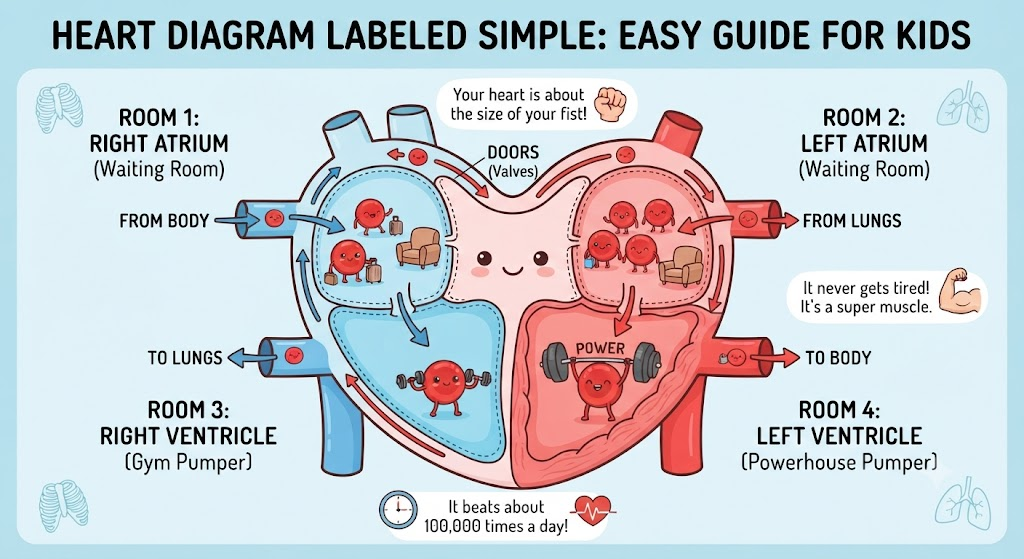
Your heart is a strong muscle that sits right in the middle of your chest, slightly tilted to the left. It is about the same size as your own tightly closed fist. When you look at a heart diagram labeled simple, you are seeing a picture of a very busy life support machine. This powerful muscle pumps red liquid called blood to every single tip of your toes and top of your hair. Without this steady pump, your body would not get the food and air it needs to run and play. The outside of the heart might look a bit smooth and round, but the inside is full of active chambers and doors. It works harder than any other muscle in your entire body. Even when you run super fast in a game of tag, your heart steps up its pace to keep you going strong.
The Four Rooms of the Heart
Inside your heart, there are four special rooms called chambers. If you study a heart diagram labeled simple, you will see two rooms on the top and two rooms on the bottom. The top rooms have a fancy name, which is the atria. The bottom rooms are called the ventricles. Think of these four rooms as an upstairs and a downstairs in a very tidy little house. The top rooms catch the blood when it comes back from your body and your lungs. Then, they push that blood down into the bigger and stronger bottom rooms. The bottom rooms do the heavy lifting of squeezing the blood back out on a long trip. Having these separate rooms keeps the used blood from mixing up with the fresh blood. It is an organized system that never makes a single mistake.
Meet the Right Atrium
Let us start our room-by-room tour at the top right side of the heart. On any good heart diagram labeled simple, this spot is marked as the right atrium. This little room acts like a welcoming front porch for blood that has already delivered its oxygen all over your body. This used blood is a dark red or bluish color because it dropped off all the good stuff and picked up trash gas called carbon dioxide. The right atrium collects this sleepy blood and gets ready to move it along. It feels a bit like a waiting room at a train station where passengers gather before the next big ride. Once it is full, it gently squeezes the door open and sends the blood downstairs to the next stop.
The Right Ventricle Takes Over
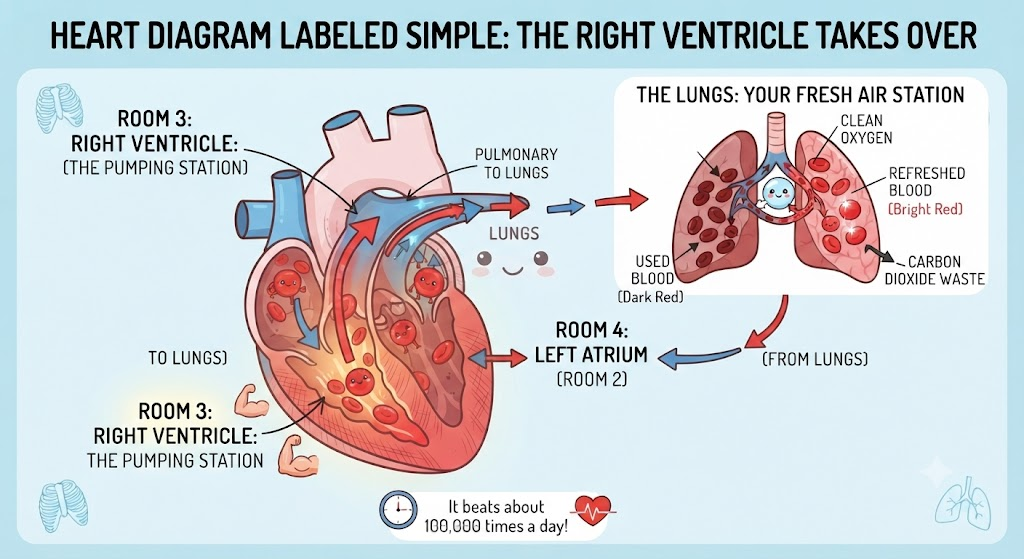
Now the blood has dropped down to the bottom right room of the heart. This busy space is known as the right ventricle on a clear heart diagram labeled simple. The walls here are a little thicker because this room has to squeeze hard. Where does it send the blood next? It pumps that used, dark red blood straight to your lungs. Your lungs are like a fresh air station. When you take a big breath in, your lungs fill up with clean oxygen. The blood picks up that fresh oxygen and drops off the carbon dioxide waste when you breathe out. The right ventricle does an important job making sure your blood gets a nice, clean bath of fresh air before it goes anywhere else.
Welcome to the Left Atrium
After your blood visits the lungs and gets all shiny and bright with fresh oxygen, it comes right back to the heart. It arrives at the top left room, which is called the left atrium on a heart diagram labeled simple. This room is like a cozy sunroom where the brand new, oxygen-rich blood gathers. The blood looks bright red now because it is full of healthy life and energy. The left atrium does not rest for long. It collects this fresh supply and pushes it right through a little doorway down into the final big room of the house. It is like a relay race where the runner passes the baton smoothly to the next teammate without dropping it.
The Mighty Left Ventricle
We have reached the biggest and strongest room in the entire heart. On a standard heart diagram labeled simple, the left ventricle takes up the bottom left corner and has very thick, muscular walls. Why is it so thick and tough? Because this room has to pump bright red blood all the way from your head down to your toes. It needs enough power to push that liquid through thousands of miles of tiny blood vessels in your body. When you feel a strong heartbeat against your ribs, you are mostly feeling this mighty left ventricle doing a giant push. It works like a super-powered water hose, making sure every single cell in your body gets a drink of fresh, clean fuel.
The Super Highway Called the Aorta
Once the left ventricle gives that huge squeeze, the blood shoots out into a massive main pipe. This giant blood vessel is called the aorta, and you can spot it right at the top of a heart diagram labeled simple. The aorta is the biggest artery in your whole body, shaped a bit like a candy cane as it arches over the heart. It branches off into smaller and smaller roads, like highways turning into neighborhood streets. Some of those little branches go up to your brain to help you think during a math test. Other branches go down to your legs so you can kick a soccer ball across the field. The aorta is the master highway of your entire circulation system.
The Amazing Little Doors Called Valves
Have you ever wondered how the blood only moves in one correct direction? Inside the heart, there are tiny flaps of tissue called valves, clearly shown on a heart diagram labeled simple. These valves act just like one-way swinging doors between the rooms and the pipes. When the blood passes through, the door snaps shut behind it so the liquid cannot sneak backward. If you listen to a doctor’s stethoscope, that classic lub-dub sound is actually the sound of these little doors snapping shut over and over again. They keep the traffic flowing smoothly without any messy jams. Without these hardworking valves, your blood might get confused and go the wrong way!
How to Keep Your Heart Happy
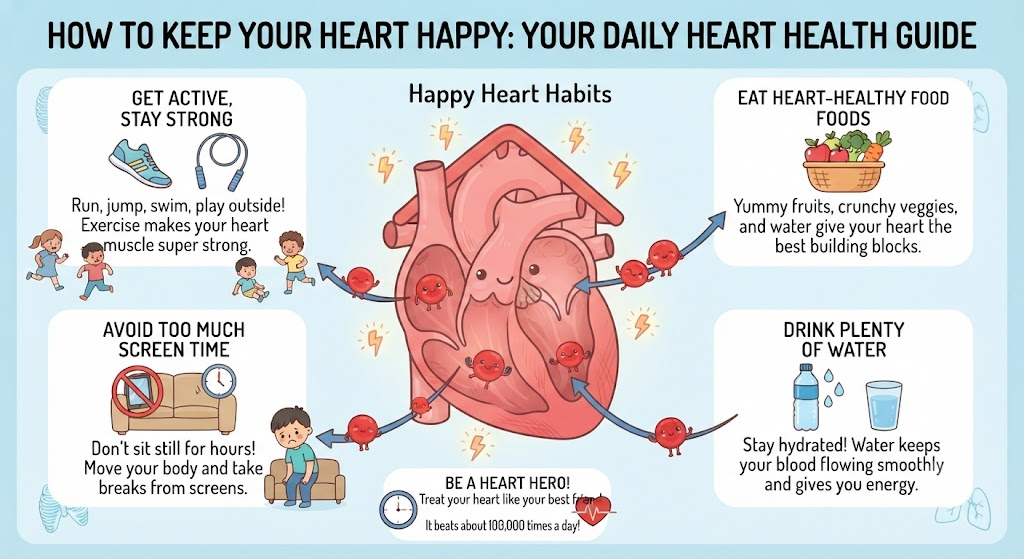
Your heart is a wonderful gift, and it needs a little help from you to stay strong and healthy. Looking at a heart diagram labeled simple reminds us how much work this muscle does every single day. To keep it happy, you should run, jump, swim, and play outside as much as you can. Exercise makes the heart muscle bigger and stronger, just like lifting small weights makes your arm muscles tougher. Eating yummy fruits, crunchy veggies, and drinking plenty of water also gives your heart the right building blocks. Try to avoid sitting still for too many hours watching screens. Treat your heart like your best friend, and it will keep you bouncing with energy for a lifetime.
Frequently Asked Questions
What is the main job of the heart?
The heart pumps blood through your whole body to deliver oxygen and food to your organs and muscles.
How big is a child’s heart?
Your heart is roughly the same size as your own fist when you squeeze your fingers tight together.
What are the four rooms inside the heart called?
They are called the right atrium, left atrium, right ventricle, and left ventricle.
Why does the heart make a lub-dub sound?
That sound is the noise of the tiny heart valves snapping shut to keep the blood moving forward.
What color is the blood inside your heart?
Blood with oxygen is bright red, while blood that dropped off its oxygen looks dark red or bluish.
How can I make my heart stronger?
You can keep your heart strong by running, playing outside, and eating healthy foods like fruits and vegetables.
Conclusion
We just took an amazing journey through the busy four-room house inside your chest! Checking out a heart diagram labeled simple proves that science does not have to be confusing or boring. From the welcoming right atrium to the mighty left ventricle and the giant aorta highway, every part works together like a well-oiled machine. Your heart beats around 100,000 times every single day just to keep you alive, smiling, and ready for adventure. Now that you know how the chambers and valves operate, why not grab some crayons and draw your own simple heart map on a blank piece of paper? Show it to a friend or family member and teach them how your amazing inner pump works!