If you’ve ever tried docking a boat in tricky conditions, you already know it can feel a bit like solving a moving puzzle. One of the most challenging situations is figuring out how should you approach a dock when the wind or current is pushing you away from the dock. Unlike calm water docking, this scenario requires patience, control, and a solid understanding of boat handling.
The good news? With the right technique, you can still dock smoothly and safely even when nature is working against you. In this guide, we’ll break down practical steps, positioning strategies, and key tips to help you stay in control.
Understanding the Challenge: Wind and Current Effects
Before learning the technique, it helps to understand what’s happening.
When wind or current pushes you away:
- The boat loses natural drift toward the dock
- You must use engine power more actively
- Timing becomes more important
- Steering adjustments need to be more precise
In simple terms, you’re constantly fighting separation from the dock.
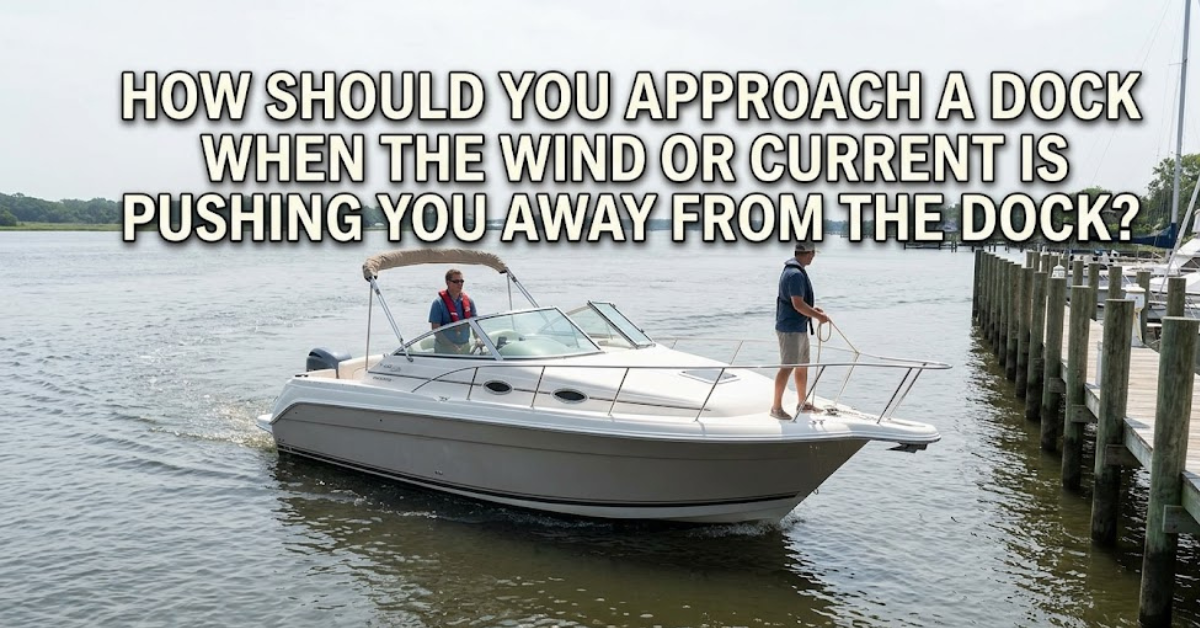
How Should You Approach a Dock When the Wind or Current Is Pushing You Away From the Dock?
The key principle is controlled momentum with a shallow angle approach.
Here’s how to do it step by step:
1. Approach at a shallow angle
Instead of heading straight in:
- Approach the dock at about a 20–30 degree angle
- This gives you better control and adjustment time
- Avoid steep or direct angles that increase drift risk
A shallow angle helps you “slide” into position rather than get pushed off course.
2. Maintain steady, slow speed
Speed control is critical.
- Go slow enough to correct drift
- But fast enough to maintain steering control
- Use short bursts of throttle instead of constant power
Too slow = loss of control
Too fast = harder docking impact
3. Use more throttle on approach
Since wind or current is pushing you away:
- Slightly increase forward thrust when needed
- Compensate for drift before reaching the dock
- Adjust continuously rather than overcorrecting
Think of it as “fighting the push,” not resisting it suddenly.
4. Turn the bow into the wind or current
A key boating technique:
- Point the bow slightly into the force
- This reduces sideways drift
- Helps maintain alignment with the dock
This adjustment keeps your approach stable.
5. Use short gear shifts for control
Instead of staying in one gear:
- Shift between forward and neutral as needed
- Use reverse briefly to slow drift
- Make small corrections rather than large movements
This gives you precision control.
6. Prepare lines and fenders early
Before reaching the dock:
- Have dock lines ready
- Position fenders on the correct side
- Assign roles if you have passengers
Preparation reduces last-second stress.
Common Mistakes to Avoid When Docking in Wind or Current
Even experienced boaters can make errors.
Avoid these:
- Approaching too fast
- Steering too sharply
- Waiting too long to correct drift
- Not compensating for wind early
- Forgetting fenders or lines
Small mistakes can quickly turn into docking difficulty.
Extra Tips for Better Docking Control
1. Practice in open water first
Get comfortable with throttle and steering response.
2. Observe water conditions early
Check wind direction and current strength before approaching.
3. Use landmarks for alignment
Pick a visual reference to guide your approach angle.
4. Stay calm and patient
Rushed movements lead to overcorrection.
Why Controlled Docking Technique Matters
Proper docking isn’t just about convenience—it’s about safety.
Good technique helps:
- Prevent hull damage
- Avoid collisions
- Protect passengers and other boats
- Reduce stress during docking
Frequently Asked Questions
How should you approach a dock when the wind or current is pushing you away from the dock?
Use a shallow approach angle, maintain slow controlled speed, and compensate with steady throttle and steering adjustments.
What is the best angle for docking in wind?
A 20–30 degree approach angle is generally most effective.
Should you go fast or slow when docking?
Slow and controlled is best, but not so slow that you lose steering control.
How do you counteract wind pushing the boat away?
Turn the bow slightly into the wind and use controlled throttle adjustments.
What is the most important docking rule?
Always maintain control of speed and direction at all times.
Conclusion
Understanding how should you approach a dock when the wind or current is pushing you away from the dock comes down to one thing: control. With a shallow approach angle, steady speed, and smart use of throttle and steering, you can safely guide your boat even in challenging conditions.
Docking in wind or current isn’t about force—it’s about precision. The more you practice these techniques, the more natural and confident your approach will become, even when the water isn’t cooperating.