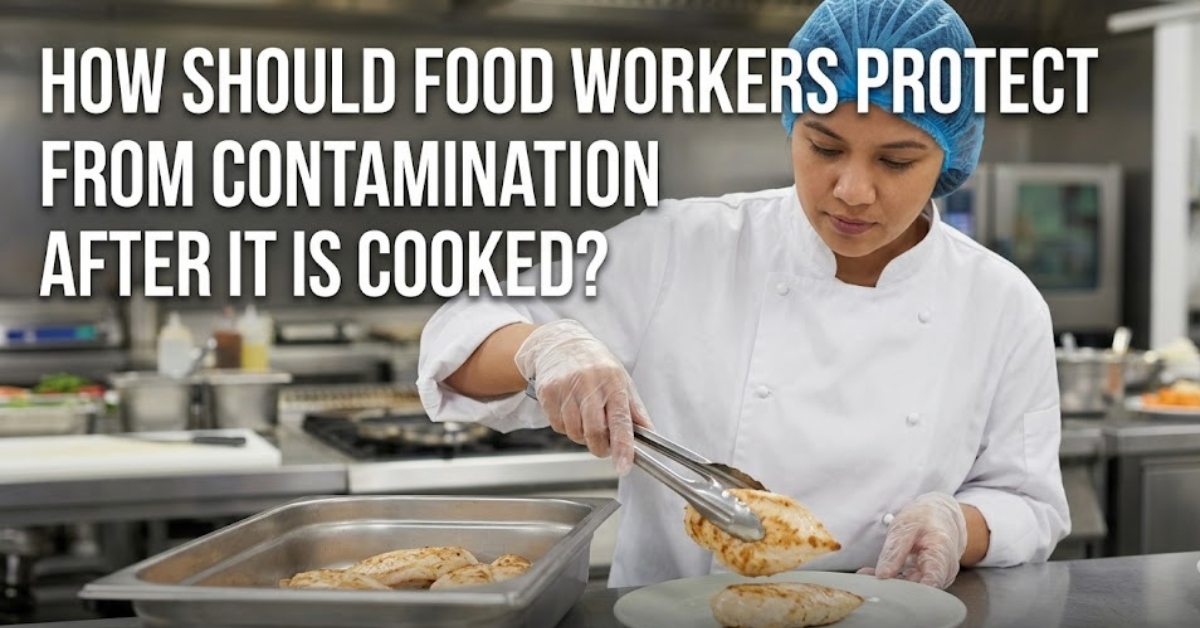
If you work in a kitchen or food service environment, one question that comes up often is: how should food workers protect food from contamination after it is cooked? It might sound simple—food is already cooked, so it’s safe, right? Not exactly.
Even after cooking, food can still become unsafe if it’s not handled properly. From improper storage to dirty utensils or even poor kitchen hygiene, contamination can happen quickly. In this guide, we’ll break down practical, real-world food safety steps workers should follow to keep cooked food safe and customers protected.
Why Cooked Food Can Still Become Contaminated
Cooking kills most harmful bacteria, but it doesn’t make food immune forever.
Common risks after cooking:
- Cross-contamination from raw foods
- Dirty utensils or surfaces
- Improper holding temperatures
- Poor personal hygiene
- Pest or waste exposure
That’s why food safety doesn’t end when cooking is done—it continues until the food is served.
How Should Food Workers Protect Food From Contamination After It Is Cooked?
Let’s get into the core practices every food handler should follow.
1. Keep food at safe temperatures
Cooked food must be held at the correct temperature to prevent bacterial growth.
- Hot food: Keep above 60°C (140°F)
- Cold food: Keep below 5°C (41°F)
Use warming trays, steam tables, or refrigeration as needed.
2. Use clean and sanitized utensils
Never reuse utensils that touched raw food.
Best practices:
- Wash, rinse, and sanitize tools after each use
- Use separate utensils for different dishes
- Avoid touching food with bare hands
3. Store cooked food properly
Proper storage is critical for preventing contamination.
- Cover food with lids or food-grade wrap
- Store in clean, labeled containers
- Keep raw and cooked foods separate
- Use FIFO (First In, First Out) rotation
4. Avoid cross-contamination
Even after cooking, food can get contaminated if it touches unsafe surfaces.
Workers should:
- Use separate cutting boards
- Avoid placing cooked food on unclean counters
- Change gloves frequently
5. Maintain personal hygiene
Food handlers play a huge role in food safety.
Key rules:
- Wash hands thoroughly and frequently
- Wear clean uniforms
- Tie back hair or use hairnets
- Avoid touching face or phone while handling food
6. Limit exposure to air and handling
The more food is exposed, the higher the risk.
- Keep food covered at all times
- Serve food quickly after preparation
- Avoid unnecessary touching or tasting
How Should Food Workers Keep Garbage Cans Clean and Free of Buildup?
Another important part of preventing contamination is proper waste management.
Why it matters:
Dirty garbage cans attract pests, bacteria, and unpleasant odors—all of which can affect food safety.
Best practices for clean garbage management:
1. Use liners in all bins
- Prevents direct contact with waste
- Makes cleaning easier
2. Empty bins regularly
- Do not let waste overflow
- Remove trash before it becomes a hazard
3. Clean and disinfect daily
- Wash bins with hot water and detergent
- Use food-safe disinfectants
- Let them dry completely before reuse
4. Keep bins covered
- Always use lids
- Prevents flies and rodents from entering
5. Place bins away from food areas
- Never store garbage near prep stations
- Maintain clear separation between waste and cooking zones
Temperature Danger Zone Explained
One of the most important food safety concepts is the “danger zone.”
Temperature range:
- Between 5°C and 60°C (41°F–140°F)
In this range:
- Bacteria grow rapidly
- Food becomes unsafe quickly
That’s why controlling temperature is essential after cooking.
Simple Food Safety Checklist for Workers
Here’s a quick daily checklist:
- Keep cooked food covered
- Maintain correct temperatures
- Use clean utensils only
- Wash hands frequently
- Store food properly
- Clean waste bins daily
- Prevent cross-contamination
Common Mistakes Food Workers Should Avoid
- Leaving cooked food uncovered
- Mixing raw and cooked tools
- Ignoring temperature control
- Not cleaning garbage areas
- Handling food with bare hands
Even small mistakes can lead to serious food safety issues.
Frequently Asked Questions
Why is cooked food still at risk of contamination?
Because bacteria can still spread through air, hands, utensils, and surfaces after cooking.
How should food workers protect food from contamination after it is cooked?
By keeping it at safe temperatures, using clean utensils, storing it properly, and maintaining hygiene.
Why is garbage management important in food safety?
Dirty garbage areas attract pests and bacteria, which can contaminate food.
What is the safest way to store cooked food?
In covered, clean containers at safe temperatures, separated from raw food.
What is the danger zone in food safety?
It is between 5°C and 60°C, where bacteria grow rapidly.
Conclusion
Understanding how should food workers protect food from contamination after it is cooked is essential for maintaining safe, high-quality meals. From temperature control to hygiene practices and proper waste management, every step matters in preventing foodborne illness.
Equally important is knowing how should food workers keep garbage cans clean and free of buildup, since waste areas can easily become contamination hotspots if ignored.
When food safety becomes a daily habit—not just a rule—kitchens become safer, cleaner, and more trustworthy. Whether you’re a professional chef or a new food handler, these practices are the foundation of safe food service.